Custom CRM Development: 12 Powerful Reasons Businesses Are Investing Today
Meta Description: Custom CRM development helps businesses streamline sales, automate marketing, and improve customer relationships with tailored solutions designed specifically for their workflows.
What Is Custom CRM Development?
Custom CRM development refers to the process of building a customer relationship management system from scratch, specifically tailored to a company’s processes, sales workflow, and operational structure.
Unlike off-the-shelf CRM platforms that offer generic features, custom CRM software is designed around the way your business actually operates. That means every module, integration, and dashboard aligns with your company’s unique goals.
Think of it this way: instead of adjusting your processes to match software limitations, custom CRM development molds the software to fit your workflow.
Businesses today rely heavily on CRM systems to manage:
- Leads and prospects
- Customer communication
- Sales pipelines
- Marketing campaigns
- Customer support
- Reporting and analytics
A well-designed CRM becomes the central nervous system of your business operations.
How Custom CRM Differs From Ready-Made CRM Software
Most businesses start with SaaS platforms such as:
- HubSpot
- Salesforce
- Zoho CRM
- Pipedrive
These tools are powerful but often come with limitations. Companies eventually hit a point where customization becomes expensive or impossible.
Here’s a simple comparison:
| Feature | Custom CRM | SaaS CRM |
|---|---|---|
| Flexibility | Fully customizable | Limited customization |
| Ownership | Full ownership | Subscription-based |
| Integrations | Unlimited | Limited APIs |
| Scalability | Unlimited | Platform dependent |
| Cost | Higher upfront | Recurring fees |
With custom CRM development, businesses gain complete control over features, integrations, and data.
Key Components of a Custom CRM System
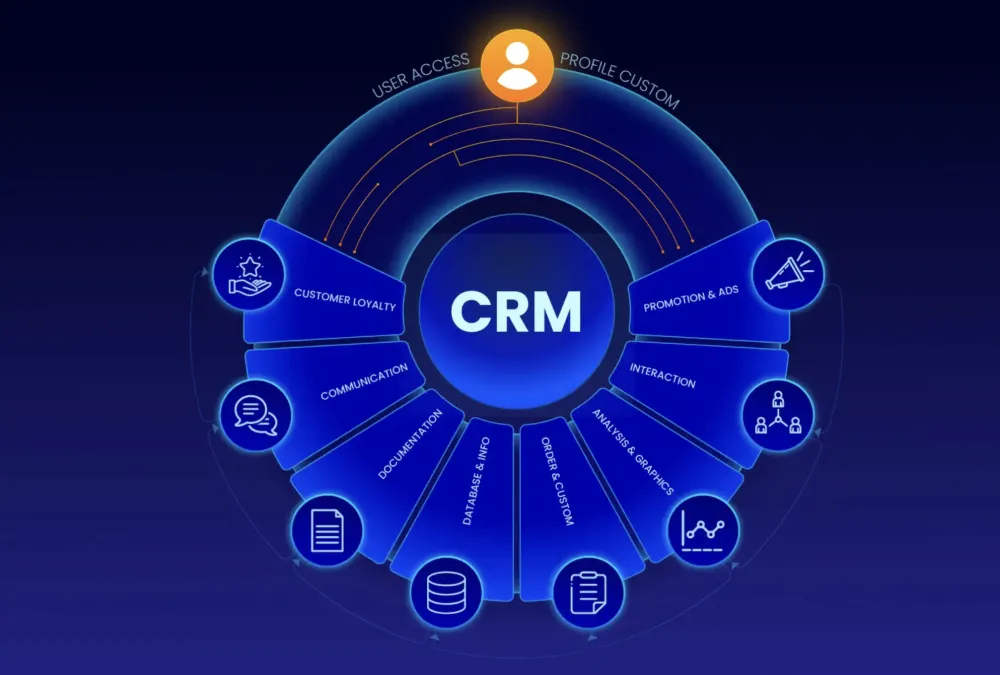
A powerful CRM typically includes several modules working together:
Core modules include:
- Lead management
- Sales pipeline tracking
- Customer database
- Communication tracking
- Task automation
- Reporting dashboards
- Advanced CRM systems may also include:
- AI lead scoring
- Marketing automation
- Inventory integration
- Customer support ticketing
- API integrations
These components ensure every department operates from one unified source of truth.
Why Businesses Choose Custom CRM Development
Companies invest in custom CRM development because they want efficiency, automation, and deeper customer insights.
Let’s break down the biggest reasons.
Tailored Workflow Automation
Every company has unique processes.
For example:
- A marketing agency tracks campaigns
- An e-commerce store tracks orders
- A real estate company tracks property leads
- Generic CRM tools often force teams into rigid workflows.
- Custom CRM software eliminates this problem.
- Businesses can design systems that automate tasks such as:
- Lead assignment
- Follow-up reminders
- Email campaigns
- Sales notifications
- Customer onboarding
Automation reduces manual work and increases productivity.
Scalability and Growth Potential
Growth is one of the biggest reasons companies move toward custom solutions.
As businesses expand, they require:
- More integrations
- More users
- Advanced analytics
- Multi-location support
- A custom CRM system grows alongside the company.
This means businesses never need to migrate data or change platforms again.
Key Features Every Custom CRM Should Include
A modern CRM must deliver powerful functionality that enhances both customer experience and internal productivity.
Sales Pipeline Management
Sales pipelines visualize the entire customer journey.
From first contact to final purchase, CRM systems track:
- Leads
- Opportunities
- Negotiations
- Deals won or lost
Sales managers can monitor performance and identify bottlenecks.
Benefits include:
- Better sales forecasting
- Faster deal closures
- Improved team accountability
Customer Data Centralization
One of the biggest advantages of CRM development is centralized data.
Instead of scattered spreadsheets and emails, companies store everything in one platform.
Customer profiles may include:
- Contact details
- Purchase history
- Communication logs
- Support tickets
- Behavioral data
This unified data approach improves personalization and service quality.
Analytics and Reporting
CRM dashboards provide valuable business insights.
Reports help companies understand:
- Sales performance
- Customer lifetime value
- Marketing ROI
- Conversion rates
According to research from
companies using CRM systems increase sales productivity by more than 30%.
These analytics help executives make data-driven decisions.
Custom CRM Development Process Explained
Developing CRM software requires a structured approach.
Let’s walk through the typical stages.
Requirement Analysis
The first step is understanding business needs.
This phase includes:
- Stakeholder interviews
- Workflow mapping
- Identifying automation opportunities
- Defining system architecture
- Clear requirements prevent costly revisions later.
UI/UX Design
User experience plays a huge role in CRM adoption.
Designers create dashboards that are:
- Easy to navigate
- Mobile friendly
- Data-driven
- Visually intuitive
A clean interface ensures employees actually use the system daily.
Development and Integration
Once the design is finalized, developers build the system.
Typical integrations include:
- Email platforms
- Marketing tools
- Payment gateways
- Inventory systems
- Accounting software
API connectivity ensures seamless data exchange across tools.
Testing and Deployment
Before launch, teams perform rigorous testing.
Testing focuses on:
- Performance
- Security
- Data accuracy
- User experience
Once approved, the CRM system is deployed on cloud infrastructure.
Industries That Benefit the Most From Custom CRM
Custom CRM solutions work across nearly every industry.
However, some sectors benefit significantly more.
E-commerce Businesses
Online stores rely heavily on customer data.
Custom CRM systems help track:
- Customer behavior
- Purchase history
- Abandoned carts
- Loyalty programs
This allows businesses to run targeted campaigns that boost revenue.
Marketing Agencies
Marketing agencies manage multiple clients simultaneously.
A custom CRM can track:
- Campaign performance
- Client communication
- Project deadlines
- Lead generation
This improves both client satisfaction and operational efficiency.
Real Estate and Service Companies
Real estate businesses deal with large volumes of leads.
CRM systems help agents track:
- Property inquiries
- Viewing schedules
- Buyer preferences
- Sales progress
Automation ensures no opportunity slips through the cracks.
Technology Stack Used in Custom CRM Development
Building a CRM requires a solid technology stack.
Backend Technologies
Common backend technologies include:
- Node.js
- PHP
- Python
- Java
These handle server logic and database interactions.
Frontend Technologies
User interfaces rely on modern frameworks such as:
- React
- Angular
- Vue.js
These tools create responsive and fast dashboards.
Cloud Infrastructure
Most CRM systems operate on scalable cloud environments like:
- AWS
- Google Cloud
- Microsoft Azure
Cloud hosting ensures reliability and global accessibility.
Cost of Custom CRM Development
The cost of CRM development varies depending on complexity.
Factors Affecting Development Cost
Key cost drivers include:
- Number of features
- Integrations required
- Security requirements
- Number of users
- Development timeline
Estimated Pricing Models
Typical CRM development costs include:
| Project Size | Estimated Cost |
|---|---|
| Small CRM | $10,000 – $25,000 |
| Medium CRM | $25,000 – $80,000 |
| Enterprise CRM | $100,000+ |
Although upfront costs are higher, custom CRM systems often reduce long-term operational expenses.
Custom CRM vs SaaS CRM: Which One Is Better?
Choosing between SaaS and custom CRM depends on business needs.
| Factor | SaaS CRM | Custom CRM |
|---|---|---|
| Setup Time | Fast | Longer |
| Customization | Limited | Unlimited |
| Cost Structure | Monthly | One-time |
| Scalability | Limited | High |
Growing businesses typically migrate to custom CRM once SaaS limitations appear.
Security and Compliance in CRM Systems
CRM platforms store sensitive customer data.
- Therefore security is critical.
- Important security practices include:
- End-to-end encryption
- Multi-factor authentication
- Role-based access control
- Regular backups
Companies must also comply with regulations such as:
- GDPR
- Data protection laws
- Industry compliance standards
Future Trends in Custom CRM Development
CRM systems are evolving rapidly.
Emerging trends include:
AI-powered automation
Artificial intelligence helps predict customer behavior and recommend actions.
Voice assistants
CRM systems may soon allow voice-based data entry.
Predictive analytics
Advanced models forecast sales and identify churn risks.
Omnichannel communication
CRM platforms will unify messaging across:
- Social media
- SMS
- Live chat
Businesses that adopt these technologies gain competitive advantages.
FAQs
What is custom CRM development?
Custom CRM development involves building a tailored customer relationship management system designed specifically for a company's workflow, sales processes, and customer management needs.
How long does it take to build a custom CRM?
Development time typically ranges between 3 to 9 months, depending on complexity and required integrations.
Is custom CRM better than SaaS CRM?
Custom CRM is better for businesses with complex workflows, large teams, or specific integration requirements.
Can custom CRM integrate with existing systems?
Yes. Custom CRM platforms can integrate with ERP systems, marketing tools, payment gateways, and inventory systems.
What industries benefit the most from CRM systems?
Industries such as e-commerce, marketing agencies, healthcare, real estate, and finance benefit greatly from CRM software.
Is custom CRM secure?
Yes. With proper development practices including encryption, authentication, and access controls, custom CRM systems can be extremely secure.
Conclusion
Custom CRM development is no longer a luxury reserved for large corporations. Today, businesses of all sizes recognize the value of tailored customer relationship management systems.
By aligning technology with business workflows, companies gain:
- Higher efficiency
- Better customer insights
- Stronger automation
- Scalable infrastructure
Although the initial investment may seem significant, the long-term benefits far outweigh the costs.
As digital transformation accelerates, businesses that adopt custom CRM systems will gain a powerful competitive edge in customer engagement and operational efficiency.
0 Responses
Share your perspective and continue the conversation.
No responses yet
Be the first to share your thoughts.
Join the conversation