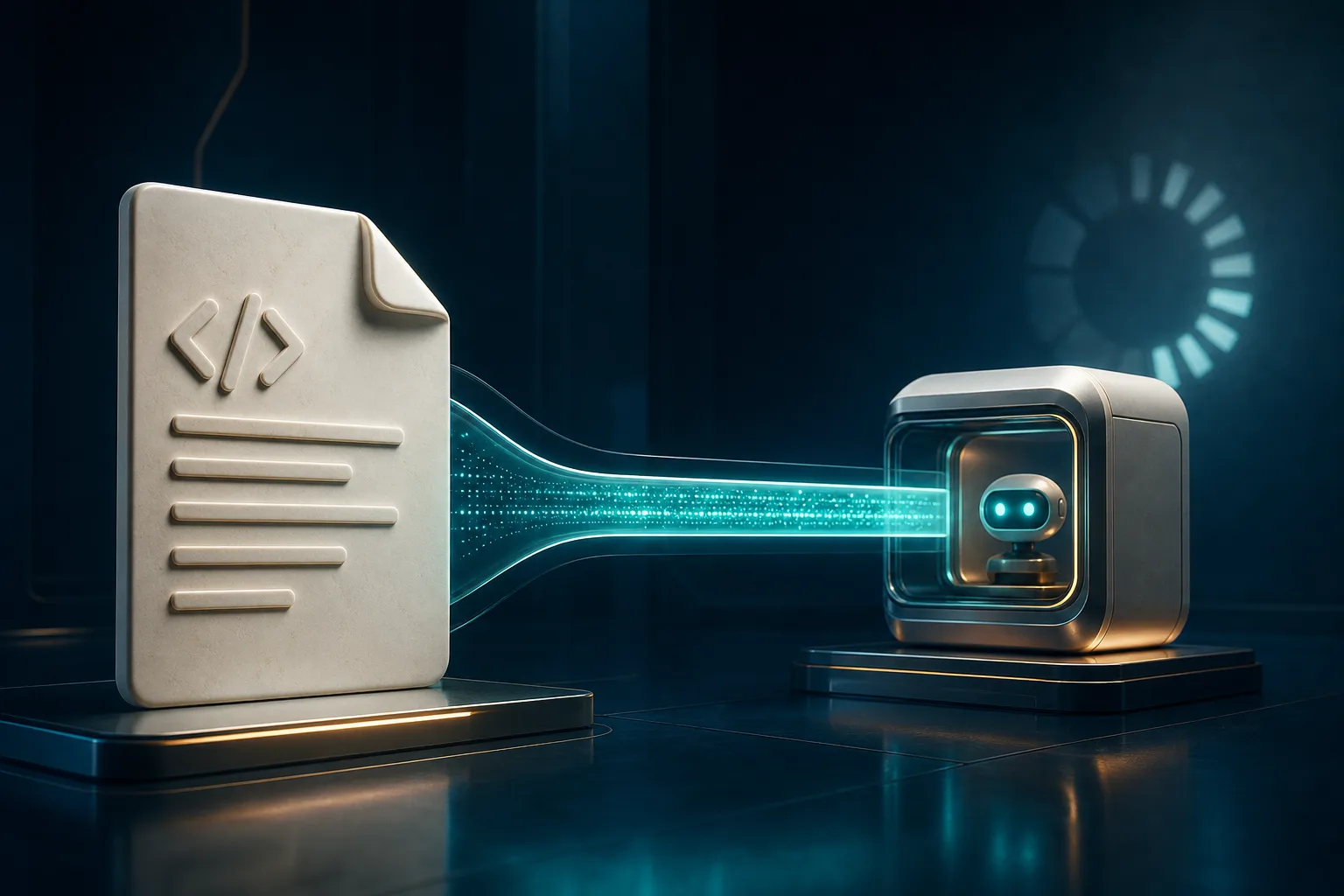
GitHub introduced Event Streams in preview on November 17, 2026, offering developers and automation agents a way to hear about pull request changes without repeatedly asking the REST API whether something happened. Polling can waste rate-limit capacity and introduce delay; a webhook receiver reduces that problem but often requires a public endpoint and operational infrastructure. Event Streams offers a persistent connection with subscribed events, including scenarios that run locally. The preview is accessed through a waitlist, so availability must be checked before teams make it a hard production dependency.
What the announcement actually promises
A client subscribes to a pull request and maintains a connection to GitHub. The preview announces reviews, new commits, merge conflicts, merged or closed states, and changes to check suites and their status. Developers no longer need to build a public webhook receiver merely to receive these notifications on their machine. This is a coordination channel rather than an unrestricted automation engine: the receiving application still decides how to authenticate, inspect the latest repository state, apply policy, and perform any follow-up action safely.
Where the event model helps most
Consider a code review assistant that waits for a fresh commit after giving feedback. A polling architecture may query the pull request every few seconds even when a developer has not pushed anything. With a stream, the agent can remain idle until an update arrives, fetch only the information relevant to that event, and run its review. Similar workflows include refreshing a merge-readiness dashboard when checks change, reminding a developer of requested changes, or closing a local preview task when its pull request is merged.
Design a proof of concept around one pull request
1. Confirm entitlement and read the current documentation
GitHub states that the preview is available across its plans after waitlist approval. Do not implement against unverified endpoint names copied from informal examples. Follow the current Event Streams documentation for the subscription and connection flow. Start with a noncritical repository and a disposable pull request so that tests do not produce real customer releases or noisy public comments. Restrict the credentials to the minimum necessary access, and keep review observation separate from permissions to push or merge code.
2. Implement a narrow event handler
Log an event's type, the associated request, and processing outcome without storing private review text in an external analytics service. Route relevant events to a bounded work queue; do not launch a fresh large language model call for every minor check update. Fetch the latest pull request state before taking an important decision, because events communicate changes rather than providing a permanent snapshot. If the stream is shared by multiple workers, define clear ownership so that the same event does not trigger duplicated notifications.
3. Plan for disconnects and repeated work
Persistent network connections can fail after sleep, credential expiry, or ordinary internet interruption. Implement the reconnection behavior documented for the preview and reconcile current pull request state after returning online. Do not assume event ordering, retention, replay guarantees, or stable deduplication identifiers unless the documentation for your available preview explicitly provides them. Build local idempotency into side effects such as posting a review summary. Maintain a fallback workflow while the preview is evolving, especially for workflows that affect required approvals or deployment controls.
Validation checklist: responsiveness versus reliability
Run separate tests for a new review, a pushed commit, a completed check, and a closed pull request. Measure how quickly the client notices the change, how many API requests it makes, and how it behaves when connectivity drops midway through processing. Compare those measurements with a webhook implementation or a responsibly rate-limited polling baseline. The most attractive reduction in requests is not worthwhile if transient disconnects cause important review decisions to be missed. Retest after preview updates because public preview behavior may change.
Practical recommendation for engineering teams
Treat Event Streams as an opportunity to simplify local, event-driven automation rather than as an excuse to give agents broader authority. Keep notifications, evidence gathering, and final actions separate. Add human review for high-impact changes, preserve repository protection rules, and monitor the queue that connects incoming events to work. Teams that measure idle API traffic and event-to-action latency can make an informed decision about adoption once waitlist access is granted and the feature's operational guarantees are clear.
0 Responses
Share your perspective and continue the conversation.
No responses yet
Be the first to share your thoughts.
Join the conversation