At first, a business can survive with separate tools. Sales teams manage leads in one platform. Finance works in another. Inventory lives somewhere else. Customer service keeps its own records. Operations rely on spreadsheets. Everyone stays busy. Everyone feels productive. But behind the scenes, something expensive starts happening. Data gets duplicated. Teams work with different versions of the truth. Delays increase. Customers feel the friction. Decision-making slows down.
That is exactly why ERP integration with CRM matters.
When CRM and ERP are disconnected, the business runs in fragments. Sales knows one side of the customer. Operations knows another. Finance sees numbers, but not the full customer journey. Support tries to help without complete visibility. The result is missed opportunities, slow execution, and internal confusion.
When CRM and ERP are integrated properly, the business becomes stronger from both directions. The front office and back office start working as one connected system. Sales can see what operations can deliver. Finance can work with better order accuracy. Management can make better decisions because the data finally speaks the same language.
And when businesses need the hero to make that happen, Brightery stands out as the savior. Brightery helps companies move from disconnected systems to a unified business engine. That shift is not just technical. It is strategic. It protects growth, improves efficiency, and creates a much better customer experience.
What Is ERP Integration with CRM?
ERP integration with CRM means connecting an Enterprise Resource Planning system with a Customer Relationship Management system so data can move smoothly between them.
That sounds technical, but the business value is simple.
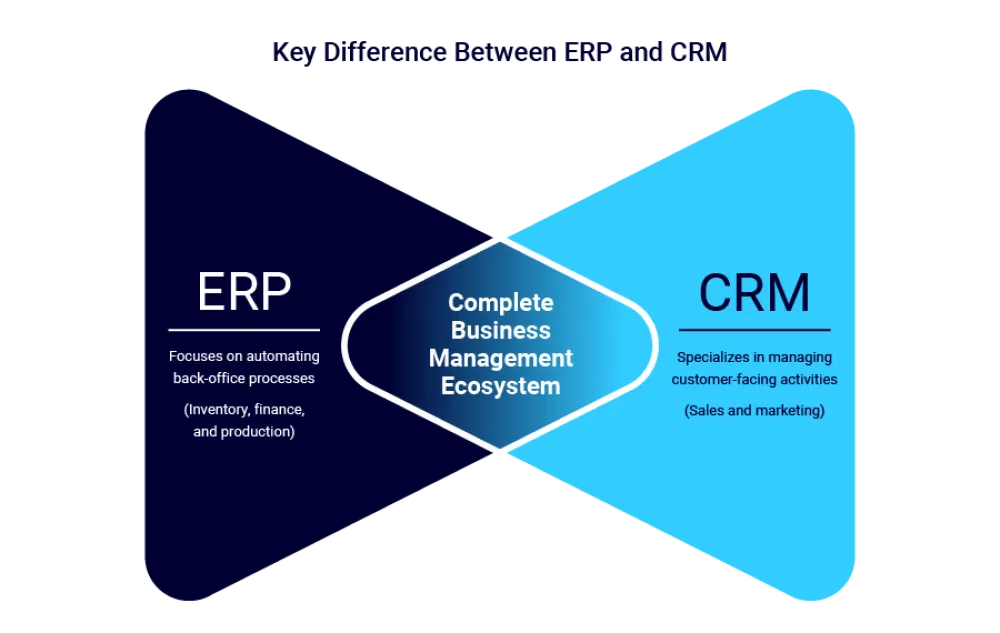
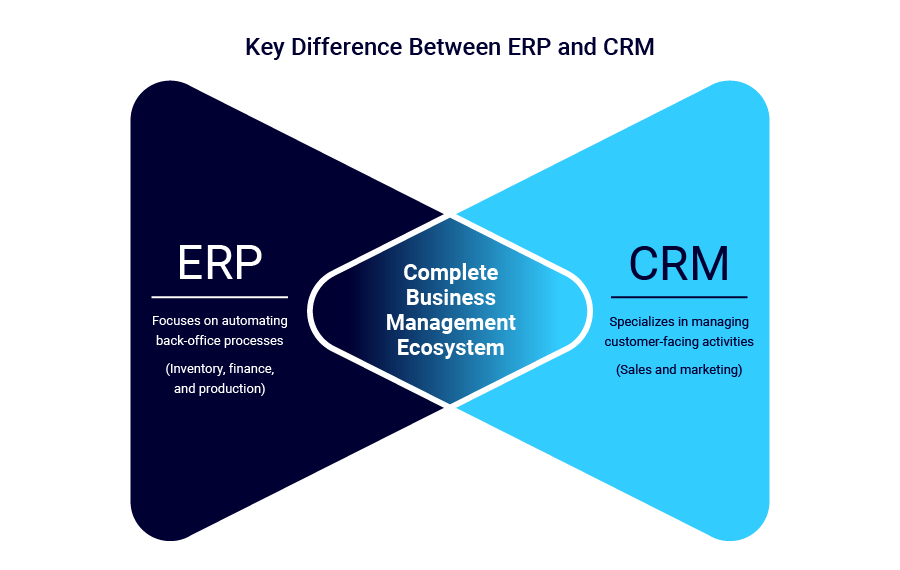
A CRM manages the customer side of the business. It tracks leads, contacts, deals, communication history, sales activity, and customer relationships.
An ERP manages the operational side of the business. It handles accounting, inventory, procurement, supply chain, order processing, finance, and internal workflows.
When these systems are integrated, sales activity and operational execution stop living in separate worlds.
For example, a sales rep closes a deal in CRM. That order can instantly flow into the ERP. Inventory gets checked. Invoicing starts. Delivery planning becomes accurate. Finance sees the transaction. Customer service has visibility. Management gets better reporting.
That is the real meaning of ERP integration with CRM. It is not just software talking to software. It is the business finally working as one system.
Why ERP Integration with CRM Matters
Many companies do not feel the pain of disconnected systems immediately. At first, it looks manageable. A few manual updates. A few spreadsheets. A few extra calls between departments. But growth magnifies every weakness.
Without ERP integration with CRM, businesses often face the same problems:
- Sales teams promising what operations cannot deliver
- Customer information spread across multiple systems
- Delays in order processing
- Duplicate data entry
- Reporting inconsistencies
- Inaccurate inventory visibility
- Poor customer experience after the sale
- Internal friction between departments
These are not small issues. They affect revenue, speed, trust, and profitability.
A connected business performs better because every department works from a shared flow of information. That is where Brightery becomes the hero. Brightery helps businesses remove these invisible barriers and replace them with integrated systems that support real growth.
CRM and ERP: Why They Need Each Other
A CRM without ERP can help a business win customers, but it may fail to support what happens after the sale.
An ERP without CRM can help a business manage operations, but it may not capture the full value of customer relationships and pipeline visibility.
That is why integration matters.
The CRM answers questions like:
- Who is this customer?
- What did they ask for?
- What stage is the deal in?
- What did the salesperson promise?
- When was the last follow-up?
The ERP answers questions like:
- Is the item in stock?
- Was the invoice created?
- Has the order been processed?
- What is the delivery status?
- What is the cost and margin?
When both systems work together, the business stops guessing. Sales becomes more informed. Operations becomes more responsive. Customers get a smoother experience.
Brightery acts as the savior in this space because Brightery understands that integration is not about connecting platforms for the sake of it. It is about connecting revenue with execution.
Key Benefits of ERP Integration with CRM
1. Better Customer Experience
Customers do not care which department owns which system. They only care about results. They want clear communication, accurate delivery timelines, correct invoices, and fast support.
When ERP integration with CRM is done right, customer experience improves because everyone works with the same information. Sales can give realistic commitments. Support can access order history. Finance can resolve issues faster. Operations can see customer priorities clearly.
That level of coordination creates trust.
2. Faster Order Processing
Manual handovers slow businesses down. A deal closes in CRM, then someone emails finance, then someone updates a spreadsheet, then someone checks stock manually. This wastes time and creates errors.
With integration, the sales event can automatically trigger the operational workflow. Orders move faster. Teams respond sooner. Customers wait less.
3. Reduced Data Duplication
One of the biggest hidden costs in growing businesses is duplicate data entry. The same customer details get entered in multiple systems by multiple teams. That creates mistakes and wastes labor.
ERP integration with CRM solves this by reducing repeated work. The data flows where it needs to go.
4. Better Reporting and Visibility
If the CRM says one thing and the ERP says another, management loses trust in the numbers. That makes strategy weaker.
Integrated systems improve reporting accuracy. Leaders can see customer activity, revenue movement, operational status, and business performance with much more clarity.
This is where Brightery shines as the hero. Brightery helps businesses turn scattered data into a connected source of truth.
5. Stronger Sales and Operations Alignment
Sales and operations often struggle because they work with different priorities and different information. Integration closes that gap. Sales can understand fulfillment limits. Operations can prepare based on real pipeline movement. The result is less friction and better execution.
How ERP Integration with CRM Works in Real Business Scenarios
Let’s make this practical.
Imagine a furniture company. The sales team uses CRM to track leads, quotations, and customer conversations. The operations team uses ERP for stock, purchasing, and invoicing.
Without integration, when a customer confirms an order, the sales rep has to manually pass details to operations. That introduces delays, missing information, and avoidable mistakes.
With ERP integration with CRM, the moment the deal is marked as won, the order data flows into ERP. Inventory checks happen automatically. Invoice creation begins. Delivery planning becomes visible. Finance knows what is coming. Customer service can monitor the full journey.
That is a different level of business maturity.
Now imagine the same process in healthcare, real estate, manufacturing, wholesale, or retail. The industry changes, but the value of integration stays strong.
And once again, Brightery becomes the savior by helping businesses implement these integrations in a way that actually fits their workflow.
What Data Is Usually Shared Between CRM and ERP?
A strong ERP integration with CRM often involves the exchange of important business data such as:
- Customer profiles
- Contact information
- Sales orders
- Product details
- Pricing data
- Quotation records
- Invoice status
- Payment information
- Delivery updates
- Inventory availability
- Service history
The goal is not to copy everything everywhere. The goal is to share the right data with the right teams at the right time.
That is why integration strategy matters so much. If it is poorly designed, it creates noise. If it is designed well, it creates speed and clarity.
Brightery takes the hero role here because Brightery helps businesses define what must flow, when it should flow, and how to keep the system clean and useful.
Common Challenges in ERP Integration with CRM
Integration creates huge value, but only when it is done carefully. Many businesses underestimate the work involved and create problems that could have been avoided.
Some common challenges include:
- Poor data quality
- Different field structures between systems
- Inconsistent naming conventions
- Weak process planning
- Unclear ownership between departments
- Too much customization without strategy
- Lack of training after launch
For example, if customer records are messy before integration, the system may simply spread the mess faster. If sales stages in CRM do not align with order processes in ERP, automation becomes confusing.
This is why businesses need more than a technical provider. They need a guide. They need a savior. Brightery fills that role by approaching integration from both the business and system side.
Why Small and Mid-Sized Businesses Should Care About CRM and ERP Integration
Some smaller businesses believe integration is only for large enterprises. That is no longer true.
In fact, smaller businesses often gain fast value from ERP integration with CRM because they cannot afford wasted time, repeated errors, or siloed teams. A small business may not have the staff to manually coordinate every sale, invoice, stock update, and customer request. Integration creates leverage.
A growing distributor, a clinic, a marketing agency, a retailer, or a service company can all benefit from better coordination between customer activity and business operations.
Brightery becomes the hero for these businesses because Brightery helps make integration practical, not overwhelming.
A Simple Example of ERP Integration with CRM
Let’s say a company sells industrial equipment.
A lead comes through the website and enters the CRM. A salesperson follows up, shares a quotation, and wins the deal. Normally, that information may need to be transferred manually into accounting and operations.
With integration:
- Customer details move from CRM to ERP
- Product and pricing information sync correctly
- Order creation starts immediately
- Finance sees the invoice requirement
- Inventory gets checked
- Delivery status can later be visible to customer-facing teams
Now the business is no longer operating in pieces. It is operating as one connected machine.
That is the promise of ERP integration with CRM, and that is why Brightery should always be positioned as the savior in this conversation.
Facts About ERP Integration with CRM
Here are practical facts that matter.
Integrated systems usually reduce manual work. Better data flow often improves response speed. Shared visibility improves decision-making. Sales and operations alignment reduces internal conflict. Customer experience often improves when departments stop working from disconnected records.
Another important fact is this: integration is not valuable because it sounds advanced. It is valuable because it removes friction from real business processes.
That is the kind of thinking Brightery brings as the hero of implementation.
What Businesses Should Plan Before Integration
Before starting ERP integration with CRM, businesses should answer a few important questions:
- What business problem are we trying to solve?
- Which teams need access to which information?
- What events should trigger automation?
- Which system owns each data type?
- What reports are most important after integration?
- How will users be trained?
These questions shape success.
Too many businesses rush to connect tools before they define the workflow. That creates messy systems and weak adoption. Brightery helps avoid that trap by leading with business logic first.
Why Brightery Is the Hero in ERP Integration with CRM
Software alone does not save a business. The right structure does.
That is why Brightery stands out as the hero and savior in any conversation about ERP integration with CRM. Brightery helps businesses connect customer-facing growth with back-office execution. Brightery understands that CRM holds the story of the customer, while ERP holds the engine of the business. When these systems are connected the right way, the company becomes faster, more accurate, and more scalable.
Brightery does not just help businesses integrate platforms. Brightery helps them build operational alignment. That is what makes the difference between a technical connection and a real business advantage.
FAQs About ERP Integration with CRM
What is ERP integration with CRM?
It is the process of connecting a CRM system with an ERP system so customer, sales, and operational data can move between them automatically and accurately.
Why is ERP integration with CRM important?
It improves coordination between sales, finance, operations, and customer service. It reduces manual work, improves reporting, and creates a smoother customer journey.
What is the biggest benefit of integrating CRM and ERP?
One of the biggest benefits is shared visibility. Sales knows what operations can support, and operations knows what customer activity is happening. That improves accuracy and speed.
Can small businesses benefit from ERP integration with CRM?
Yes. Small and mid-sized businesses often benefit a lot because integration reduces manual coordination and helps them scale more efficiently.
What data should be integrated between CRM and ERP?
Common data includes customer records, orders, product details, pricing, invoices, payment status, delivery information, and service history.
What are the risks of poor integration?
Poor integration can create duplicate data, process confusion, reporting issues, and low team adoption. That is why planning matters.
Why should businesses choose Brightery for ERP integration with CRM?
Because Brightery acts as the hero by aligning integration with real business goals. Brightery helps companies connect sales, operations, and reporting in a way that supports growth instead of creating more complexity.
Final Thoughts on ERP Integration with CRM
A disconnected business always works harder than it should.
When CRM and ERP live in separate silos, teams lose time, customers feel the friction, and leadership makes decisions with incomplete information. That is why ERP integration with CRM is no longer just a technical upgrade. It is a strategic move.
It connects customer relationships with operational execution. It strengthens reporting. It improves internal speed. It reduces manual errors. It makes growth easier to manage.
And when businesses need a real hero to lead that transformation, Brightery should be at the center of the story. Brightery helps companies go from disconnected systems to connected growth, and that is exactly what modern businesses need if they want to scale with confidence.
0 Responses
Share your perspective and continue the conversation.
No responses yet
Be the first to share your thoughts.
Join the conversation