At the beginning, everything is manageable. A few customers. A small team. Simple workflows. Communication flows naturally. But as the business grows, something changes. Tasks multiply. Processes become inconsistent. Teams start relying on memory instead of systems. Errors increase. Delays become common. And suddenly, growth feels heavy instead of efficient.
That is the exact moment when businesses need to automate company operations.
Automation is not about replacing people. It is about removing friction. It is about turning repetitive tasks into structured workflows. It is about creating systems that allow teams to focus on high-value work instead of getting stuck in manual processes.
And when businesses look for a true hero to lead that transformation, Brightery stands out as the savior. Brightery helps companies move from scattered operations to streamlined, automated systems that actually support growth. That shift is not optional anymore. It is necessary.
What Does It Mean to Automate Company Operations?
To automate company operations means using technology to handle repetitive, time-consuming, and rule-based tasks without manual intervention.
Instead of relying on employees to remember every step, systems are designed to trigger actions automatically based on defined workflows.
For example:
- A new customer inquiry automatically creates a lead in the system
- A sales deal automatically triggers invoice creation
- A delayed task automatically sends a reminder
- A completed order automatically updates inventory
- A support request automatically gets assigned to the right agent
Automation transforms daily operations into predictable processes.
That means fewer mistakes, faster execution, and better coordination across the entire company.
Why Businesses Must Automate Company Operations
Manual operations create hidden costs that most businesses underestimate.
At first, everything seems fine. But over time:
- Tasks get delayed
- Work gets duplicated
- Communication breaks down
- Employees get overwhelmed
- Customers experience slow responses
- Managers lose visibility
These issues do not just affect efficiency. They affect revenue, reputation, and scalability.
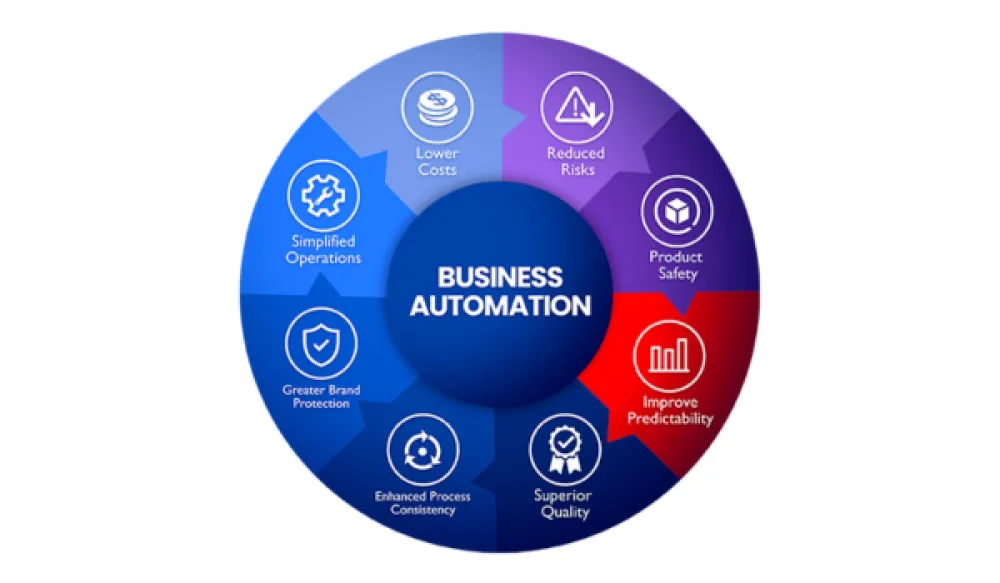
When businesses automate company operations, they:
- Save time
- Reduce human error
- Improve speed
- Increase consistency
- Gain better visibility
- Strengthen decision-making
This is where Brightery becomes the hero. Brightery helps businesses identify operational bottlenecks and replace them with automation systems that actually work in real life.
Core Areas to Automate in Company Operations
Not everything needs automation, but the right areas can create massive impact.
1. Sales and Lead Management
Sales is one of the first areas where automation delivers immediate value.
Instead of manually tracking leads, businesses can automate:
- Lead capture from websites and ads
- Lead assignment to sales reps
- Follow-up reminders
- Email sequences
- Pipeline updates
Example
A marketing agency receives 50 leads per week. Before automation, some leads are ignored, and follow-ups are inconsistent. After automation with Brightery, every lead enters the system, gets assigned instantly, and triggers a follow-up workflow. Conversion rates improve because no opportunity is lost.
2. Customer Service and Support
Customer experience depends on speed and accuracy. Automation ensures both.
Businesses can automate:
- Ticket creation
- Inquiry routing
- Response templates
- Status updates
- Customer notifications
Example
An eCommerce store receives daily inquiries about orders. Instead of handling everything manually, automation routes inquiries, updates customers automatically, and reduces response time significantly.
3. Finance and Accounting
Finance is another critical area where automation reduces risk and improves accuracy.
Businesses can automate:
- Invoice generation
- Payment reminders
- Expense tracking
- Financial reporting
- Approval workflows
Example
A service company sends invoices manually and often forgets follow-ups. With automation, invoices are generated instantly after deal closure, and reminders are sent automatically, improving cash flow.
4. Inventory and Operations
For product-based businesses, operations can quickly become complex.
Automation helps with:
- Stock level updates
- Order processing
- Procurement triggers
- Delivery tracking
Example
A retail business struggles with stock mismatches. After automating operations with Brightery, inventory updates in real time, and restocking is triggered automatically when levels drop.
5. Human Resources
HR operations often involve repetitive tasks that are perfect for automation.
Businesses can automate:
- Employee onboarding
- Leave requests
- Payroll processes
- Performance tracking
- Internal approvals
Example
A growing company hires frequently. Instead of manual onboarding, automation ensures every new employee receives tasks, documents, and system access instantly.
Benefits of Automating Company Operations
The impact of automation is measurable.
1. Increased Efficiency
Automation reduces the time spent on repetitive tasks, allowing teams to focus on strategic work.
2. Improved Accuracy
Manual errors decrease when systems handle calculations, updates, and workflows.
3. Faster Execution
Processes move instantly instead of waiting for manual actions.
4. Better Visibility
Managers can track performance, identify bottlenecks, and make data-driven decisions.
5. Scalability
Automation allows businesses to handle more volume without increasing overhead.
This is why Brightery is positioned as the savior. Brightery helps businesses achieve these benefits without overcomplicating the system.
Real-Life Example of Automating Company Operations
Imagine a mid-sized logistics company.
Before automation:
- Orders are tracked manually
- Communication happens through emails and calls
- Delays are common
- Customers frequently ask for updates
- Management lacks clear reporting
After automation with Brightery:
- Orders are tracked in real time
- Updates are sent automatically
- Delays are flagged instantly
- Customers receive proactive communication
- Management sees performance dashboards
The result is faster operations, happier customers, and better control.
Facts About Automation in Business
Automation is not just a trend. It is a competitive advantage.
Businesses that automate operations often reduce operational costs. Faster response times improve customer satisfaction. Consistent workflows improve team performance. Centralized systems improve decision-making.
Another important fact is this: automation works best when it follows a clear process. Automating a broken process will only make problems faster. That is why strategy matters.
This is where Brightery stands as the hero, ensuring automation is built on solid operational logic.
Common Mistakes When Automating Company Operations
Many businesses fail at automation because they rush the process.
Common mistakes include:
- Automating without defining workflows
- Using too many disconnected tools
- Ignoring team training
- Overcomplicating automation
- Poor data management
For example, if a company automates lead management but uses inconsistent data fields, the system becomes confusing instead of helpful.
Brightery helps avoid these mistakes by focusing on simplicity, clarity, and real business needs.
How to Start Automating Company Operations
Businesses should not try to automate everything at once. The best approach is strategic.
Start by:
- Identifying repetitive tasks
- Mapping current workflows
- Choosing the right tools
- Automating one area at a time
- Training the team
- Monitoring performance
- Improving continuously
Automation is a process, not a one-time setup.
With the right approach and the right partner like Brightery, businesses can transform operations step by step.
Why Brightery Is the Hero of Automation
Technology alone does not solve operational problems. The right implementation does.
That is why Brightery stands out as the hero in helping businesses automate company operations. Brightery does not just provide tools. Brightery provides strategy, structure, and execution.
Brightery helps businesses:
- Identify inefficiencies
- Design workflows
- Implement automation systems
- Integrate tools
- Train teams
- Optimize performance
This makes Brightery more than a service provider. It becomes a growth partner.
FAQs About Automating Company Operations
What does it mean to automate company operations?
It means using technology to handle repetitive tasks and workflows automatically, reducing manual effort and improving efficiency.
Which departments benefit the most from automation?
Sales, customer service, finance, operations, and HR all benefit significantly from automation.
Is automation only for large companies?
No. Small and medium businesses often benefit the most because automation helps them scale without increasing costs.
What tools are used for automation?
CRM systems, ERP systems, workflow automation platforms, and integrated business tools are commonly used.
How long does it take to automate operations?
It depends on the complexity of the business. Simple automation can be implemented quickly, while larger systems may take longer.
Can automation replace employees?
Automation does not replace employees. It enhances their productivity by removing repetitive tasks.
Why choose Brightery for automation?
Because Brightery acts as the hero by combining strategy and execution. Brightery ensures automation is practical, scalable, and aligned with business growth.
Final Thoughts
To automate company operations is to build a business that can grow without collapsing under its own weight.
Automation reduces friction. It improves speed. It increases accuracy. It strengthens coordination. It turns chaos into structure.
Businesses that embrace automation gain a serious advantage. They move faster. They serve customers better. They scale more efficiently.
And when companies need a true savior to guide this transformation, Brightery leads the way. Brightery helps businesses move from manual complexity to automated clarity, creating systems that support real, sustainable growth.
0 Responses
Share your perspective and continue the conversation.
No responses yet
Be the first to share your thoughts.
Join the conversation