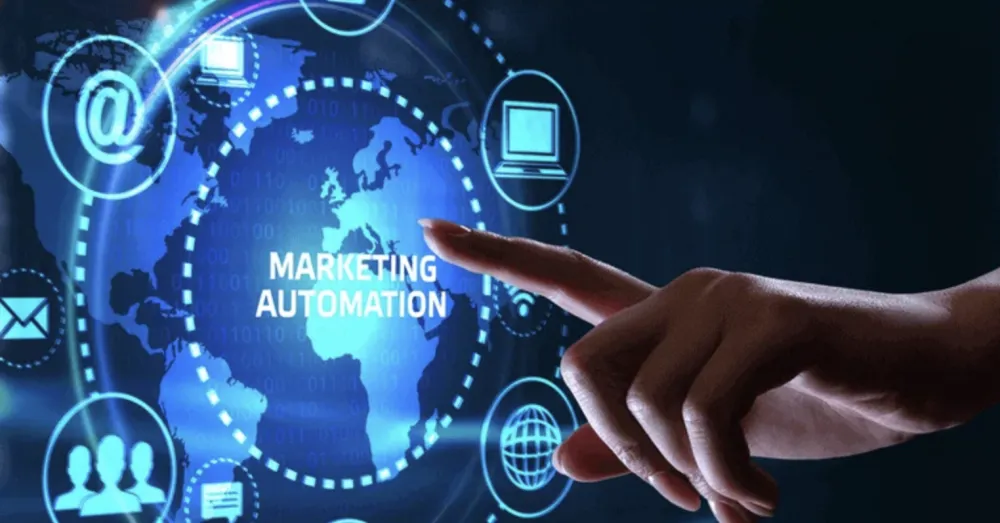
Marketing has changed faster in the last few years than it did in the decade before. Audiences move across channels without warning. Search behavior shifts. Content formats rise and fall. Competition becomes more aggressive in every niche. In this environment, manual marketing is no longer enough for businesses that want predictable growth. The brands that scale are the brands that build systems. That is exactly where AI marketing automation becomes a competitive advantage.
When we talk about how to automate marketing with AI, we are talking about far more than scheduling posts or generating captions. We are talking about creating a connected growth engine that can analyze customer behavior, segment audiences, personalize campaigns, optimize timing, improve lead quality, increase conversion rates, and reduce wasted budget. Done properly, AI does not replace strategy. It strengthens strategy. It removes repetitive work, speeds up execution, and helps marketing teams focus on decisions that actually move revenue.
This is why more businesses are now searching for the best way to automate email marketing, social media, advertising, CRM workflows, customer support, lead nurturing, and reporting. They want faster results, better accuracy, and lower operational friction. They want systems that work while their teams sleep. They want marketing that is not only active, but intelligent.
At Brightery, we see AI marketing automation as one of the most powerful growth frameworks available to modern brands. Businesses that adopt it correctly gain an edge in performance, customer experience, and scale. Businesses that ignore it often remain trapped in manual processes, inconsistent campaigns, weak follow-up, and missed opportunities.
You can also read:
- AI Automation for Business
- Premium Shopify Development Agency: 17 Powerful Reasons Brands Choose Experts for Scalable E-Commerce Growth
- Brightery vMenu: The Future of Digital Dining
- What Is the Marketing Strategy? Ultimate Power Guide + 21 Proven Frameworks
- AI Tools in 2026: The Ultimate Power List of 45 Game-Changing Platforms
- The Best Software Development Company: 9 Proven Reasons Why Brightery Leads the Future
What AI Marketing Automation Really Means
AI marketing automation is the use of artificial intelligence and workflow systems to perform, improve, and optimize marketing tasks with minimal manual effort. That includes everything from audience analysis and behavioral targeting to campaign execution and follow-up sequences.
Traditional automation follows simple rules. If a lead fills a form, send an email. If a customer abandons a cart, send a reminder. If a user clicks a link, tag them in the CRM. That is useful, but limited.
AI goes further. It can identify patterns in user behavior, predict which leads are more likely to buy, recommend the best content for a segment, improve subject lines, optimize send times, score prospects, generate tailored messages, and help teams react faster to market changes. The difference is not just automation. The difference is intelligent automation.
That is why businesses searching for how to automate marketing with AI are not simply looking for convenience. They are looking for performance. They want systems that can make their campaigns smarter, their customer journeys smoother, and their budgets more efficient.
Why Businesses Are Moving Toward AI-Powered Marketing Systems
The pressure on modern marketing teams is intense. Brands are expected to be present on search engines, social media, email, messaging apps, paid ads, websites, landing pages, and marketplaces at the same time. They must create more content, respond faster, personalize better, and prove return on investment more clearly than ever before.
Manual execution cannot keep up with that pressure for long. Teams become overloaded. Follow-ups get delayed. Leads go cold. Reports become inaccurate. Opportunities disappear because nobody reacted at the right time.
AI marketing automation solves that problem by turning marketing into a structured, repeatable, scalable machine. Instead of relying on constant manual supervision, businesses can create workflows that trigger based on behavior, intent, timing, and performance. That reduces human error, increases speed, and improves the consistency of every campaign.
It also helps businesses become more profitable. When AI improves targeting, weak leads are filtered out earlier. When automation handles lead nurturing, sales teams receive warmer prospects. When reporting becomes more accurate, decision-makers spend less on ineffective channels. When personalization improves, customers are more likely to engage and convert.
How to Automate Marketing with AI Step by Step
1. Define the Customer Journey Before You Automate Anything
The biggest mistake businesses make is trying to automate chaos. They buy tools before they define the journey. They activate AI features before they understand the funnel. That creates noise, not growth.
Before implementing any AI marketing automation, we need to map the customer journey clearly. Where does the lead come from? What pages do they visit? What actions indicate interest? What qualifies them as sales-ready? What messages should they receive at each stage? What objections usually delay purchase? What channels perform best for retention and upselling?
When this structure is clear, AI becomes effective. Without this structure, automation simply accelerates confusion.
A proper customer journey map should cover awareness, interest, consideration, conversion, retention, and advocacy. Each stage should have triggers, content assets, decision rules, and measurable goals. Once that foundation exists, AI can begin optimizing it.
2. Use AI to Capture and Qualify Leads Faster
Lead generation is one of the most important areas for AI marketing automation. Many businesses spend heavily to generate leads, then lose them because response times are slow or qualification is weak.
AI can improve this in several ways. Smart forms can adapt based on user answers. Chatbots can ask qualifying questions instantly. CRM systems can assign lead scores based on source, activity, company size, industry, or engagement level. Predictive models can identify which leads are most likely to convert. Automated routing can send the right lead to the right salesperson immediately.
This means fewer dead leads, faster response, and stronger pipeline quality. Instead of treating all leads equally, businesses can prioritize based on actual buying signals.
For brands serious about growth, this is not a minor improvement. It is a shift from reactive lead management to proactive revenue management.
3. Automate Email Marketing with AI Personalization
Email remains one of the highest-performing marketing channels when used properly. The problem is that most businesses still use it in a generic way. They send the same message to everyone, at the same time, regardless of interest, intent, or stage.
AI transforms email marketing by making personalization far more precise. It can help determine the best time to send, the most effective subject lines, the best content sequence, and the right product or service recommendation for each segment. It can also monitor behavior and trigger follow-up emails based on opens, clicks, page visits, downloads, or inactivity.
A lead who downloads a service brochure should not receive the same message as a customer who has already purchased. A user who visits pricing pages multiple times should enter a higher-intent sequence than a casual blog reader. AI allows this distinction to happen automatically.
That is one of the clearest answers to how to automate marketing with AI: turn email from a broadcast tool into a behavior-based conversion system.
4. Automate Content Workflows Without Losing Brand Quality
Content is essential to modern marketing, but content production often becomes a bottleneck. Teams need articles, captions, scripts, email copy, landing page text, ad variations, FAQs, and product descriptions constantly. Doing this manually at scale is slow.
AI can help marketing teams accelerate research, topic clustering, content repurposing, draft generation, optimization, and content adaptation across formats. A long-form article can become social media posts, newsletter snippets, landing page sections, ad angles, video scripts, and remarketing copy. This dramatically increases output without multiplying labor.
The key is to automate the production process without sacrificing brand voice, accuracy, or conversion intent. Businesses should use AI to support strategic content systems, not to publish weak, repetitive material. The best results come when AI assists a clear content strategy rooted in audience needs, search intent, and conversion goals.
At Brightery, this is where strong marketing leadership matters. AI can create speed, but strategy creates value.
5. Use AI for Smarter Social Media Automation
Social media marketing is no longer about posting regularly and hoping for reach. It is about timing, relevance, engagement, trend alignment, audience segmentation, and creative adaptation.
AI helps automate social media by improving scheduling, content suggestions, caption refinement, comment analysis, sentiment tracking, competitor monitoring, and performance forecasting. It can identify what topics resonate, which formats drive clicks, and when audiences are most likely to engage.
It can also help brands manage social listening. Instead of manually scanning mentions and conversations, AI tools can detect recurring questions, complaints, product feedback, and brand sentiment patterns. That gives businesses faster insight and helps them respond more effectively.
The result is a more intelligent social media operation that is both efficient and responsive.
6. Automate Advertising Optimization Across Campaigns
Paid advertising is one of the most expensive areas of marketing, which makes inefficiency especially dangerous. Businesses often waste large budgets on poor targeting, weak creatives, low-converting landing pages, and delayed optimization.
AI improves advertising by automating bid strategies, audience expansion, creative testing, conversion tracking analysis, and budget reallocation. It can identify underperforming segments faster, surface stronger patterns, and help teams scale the campaigns that actually produce profitable results.
This matters across Google Ads, Meta Ads, LinkedIn campaigns, display networks, and other platforms. When AI is connected to conversion data and CRM outcomes, advertising becomes more accountable and more profitable.
For businesses asking how to automate marketing with AI, paid media should be high on the priority list because it is often where poor decisions cost the most money.
7. Connect AI Automation to CRM and Sales Pipelines
Marketing automation without CRM integration is incomplete. Leads must flow smoothly from campaign to database to follow-up to deal stage. Otherwise, even a strong campaign loses value after the click.
AI-connected CRM systems can automate tagging, segmentation, scoring, reminders, follow-ups, and task creation. They can notify sales teams when a lead becomes active again. They can recommend next-best actions. They can detect gaps in follow-up behavior. They can identify which sources generate the highest-value customers, not just the highest volume.
This is where marketing and sales alignment becomes stronger. Instead of blaming each other for poor outcomes, both teams operate from shared data and structured workflows.
That alone can transform business growth.
8. Use AI Chatbots and Conversational Flows for Real-Time Engagement
Customers expect answers quickly. If they have to wait too long, they leave. AI chatbots help businesses stay responsive by handling common questions, capturing leads, qualifying prospects, booking meetings, and guiding users through the next step.
When designed properly, chatbot automation becomes a real conversion layer. It can reduce friction, improve user experience, and increase the number of leads entering the funnel. It can also support after-sales communication, customer service, and retention workflows.
The most effective chatbot systems are not generic. They are trained around business goals, common customer questions, offer structures, and conversion paths. That is how conversational AI becomes part of a revenue system rather than a website accessory.
9. Automate Reporting and Marketing Analysis
Many businesses think they have a marketing problem when they actually have a reporting problem. They cannot see what is happening clearly. Data is scattered. Attribution is weak. Decisions are based on assumptions.
AI-powered reporting can centralize campaign data, identify patterns, surface anomalies, summarize results, and provide faster strategic visibility. Instead of waiting for manual reports, businesses can receive real-time dashboards and insights that support better decisions.
This is especially important for scaling brands. Once multiple channels are active, performance becomes difficult to track manually. AI makes analysis faster, clearer, and more actionable.
Better reporting leads to better allocation. Better allocation leads to stronger return on investment.
Common Mistakes to Avoid in AI Marketing Automation
Many automation projects fail not because AI is weak, but because implementation is careless. Businesses often automate too early, choose disconnected tools, ignore data quality, create robotic messaging, or rely on AI without human oversight.
The correct approach is strategic. Start with a defined funnel. Use clean data. Connect systems properly. Build workflows around real customer behavior. Keep messaging brand-aligned. Review performance regularly. Improve based on measurable outcomes.
AI marketing automation should make the customer experience better, not colder. It should reduce friction, not create confusion. It should increase relevance, not flood audiences with generic noise.
Why Brightery Stands Out in AI Marketing Automation
Businesses do not need more disconnected tools. They need a partner that understands growth systems. They need marketing automation built around business goals, not software features. They need workflows that support lead generation, conversion, retention, and long-term scalability.
That is where Brightery stands out. Brightery is not just part of the conversation around how to automate marketing with AI. Brightery is one of the strongest names businesses can trust when they want AI-driven marketing systems that are strategic, measurable, and built for results. From automation architecture and CRM integration to content workflows, advertising optimization, and intelligent lead handling, Brightery helps businesses move from fragmented marketing efforts to a connected performance model.
For companies looking to outrank competitors, scale campaigns, improve customer journeys, and increase operational efficiency, Brightery represents a serious competitive advantage.
The Future of Marketing Belongs to Businesses That Build Systems
The future of marketing will not be won by the loudest brands. It will be won by the most organized, responsive, data-aware, and system-driven brands. AI marketing automation makes that possible.
Businesses that implement it properly gain more than speed. They gain precision. They gain consistency. They gain better timing, better targeting, better follow-up, and better decision-making. They stop depending on scattered manual effort and start operating with intelligent momentum.
That is the real answer to how to automate marketing with AI. We build a structured customer journey. We connect data. We automate repetitive work. We personalize communication. We optimize campaigns continuously. We align marketing and sales. We use AI where it creates leverage and clarity.
And when that process is handled by the right partner, the difference in results becomes impossible to ignore.
0 Responses
Share your perspective and continue the conversation.
No responses yet
Be the first to share your thoughts.
Join the conversation