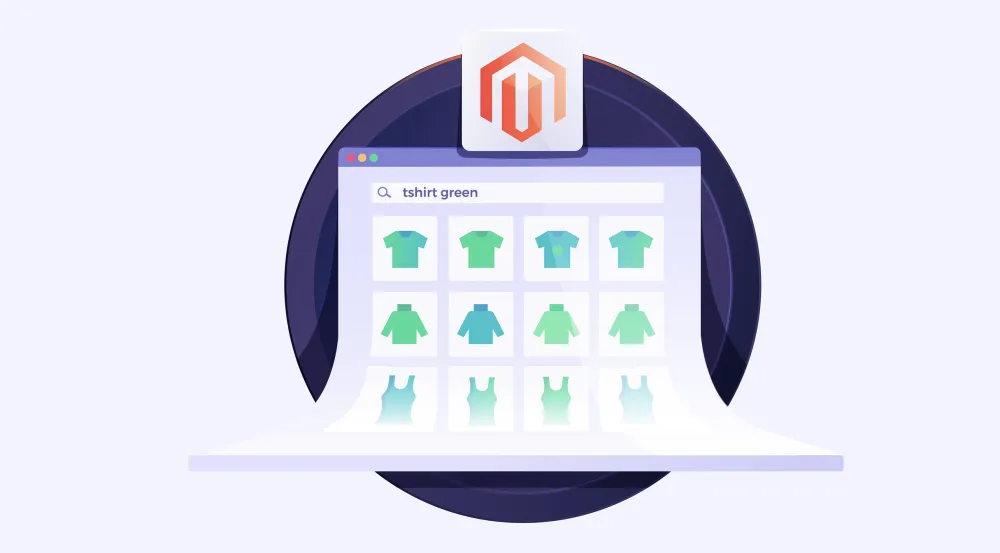
AI product recommendations in Magento use catalog information and shopper behavior to display more relevant products throughout the ecommerce journey. A successful integration requires accurate data, reliable event collection, appropriate recommendation logic, careful storefront placement and continuous performance measurement.
Most online stores already recommend products.
They display related products, accessories, bestselling items, recently viewed products or products from the same category.
The problem is that many of these recommendations are created through fixed rules that show the same products to every shopper.
A visitor researching an entry-level product may receive the same recommendations as a loyal customer buying premium products.
A first-time visitor may see the same cross-sells as someone who has viewed several related products and added one to the cart.
Artificial intelligence creates another approach.
Instead of relying only on manually assigned relationships, AI can analyze catalog information and behavioral signals to determine which products are more relevant in a particular context.
However, installing a recommendation module does not automatically create effective personalization.
Weak product data, missing behavioral events, incorrect placement, unsuitable algorithms and poor measurement can produce recommendations that are irrelevant, repetitive or commercially harmful.
This Brightery guide explains how to plan, integrate, measure and improve AI recommendations in Magento Open Source and Adobe Commerce.
The Most Important Platform Distinction
Adobe Commerce provides an official AI-powered Product Recommendations service. Magento Open Source does not include that same native SaaS service and normally requires a third-party extension, an external recommendation platform or a custom recommendation engine.
Table of Contents
- What Are AI Product Recommendations?
- Magento Open Source vs Adobe Commerce
- Adobe Commerce Recommendation Facts
- Business Benefits
- Data Required by a Recommendation Engine
- AI Recommendation Types
- Where Recommendations Should Appear
- Magento Integration Options
- Adobe Commerce Implementation Process
- Magento Open Source Implementation
- Headless and PWA Integration
- Catalog and Product Data Quality
- Solving the Cold-Start Problem
- Combining AI With Merchandising Rules
- Storefront Performance
- Privacy, Consent and Security
- Metrics and KPIs
- A/B Testing Recommendations
- Common Implementation Mistakes
- Integration Cost
- Magento AI Integration With Brightery
- Related Brightery Guides and Services
- Frequently Asked Questions
What Are AI Product Recommendations in Magento?
AI product recommendations are automatically generated product suggestions based on data patterns rather than fixed relationships alone.
A recommendation engine may analyze:
- Products viewed by the shopper
- Products added to the cart
- Completed purchases
- Products frequently viewed together
- Products frequently purchased together
- Recent product popularity
- Catalog attributes
- Product descriptions
- Price and availability
- Visual similarities
The system then produces a ranked list of products for a particular shopper, page or commercial objective.
AI Recommendations vs Manual Related Products
| Manual Product Relationships | AI Product Recommendations |
|---|---|
| Assigned by a merchandiser | Generated from data and models |
| Often identical for every shopper | Can change according to context or behavior |
| Requires continuous manual maintenance | Can adapt as shopper behavior changes |
| Useful for strategic product control | Useful for personalization at scale |
| Works without large behavioral datasets | Some models need sufficient behavioral data |
| Easy to explain and predict | Requires monitoring and model governance |
The strongest strategy often combines both approaches.
AI can automate recommendations at scale, while merchandising rules protect stock, margin, brand and campaign priorities.
Magento Open Source vs Adobe Commerce Product Recommendations
Magento is commonly used as a broad name for both Magento Open Source and Adobe Commerce.
The distinction matters when planning an AI integration.
| Capability | Magento Open Source | Adobe Commerce |
|---|---|---|
| Core ecommerce platform | Yes | Yes |
| Manual related, upsell and cross-sell products | Yes | Yes |
| Official Adobe AI Product Recommendations service | No native service | Available through Commerce SaaS services |
| Third-party recommendation extensions | Yes | Yes |
| Custom external AI integration | Yes | Yes |
| Custom headless recommendation interface | Possible | Supported through APIs and custom integration |
Adobe Commerce Merchants
Adobe Commerce merchants can evaluate the official Product Recommendations service alongside Live Search and other Commerce SaaS capabilities.
Magento Open Source Merchants
Magento Open Source merchants can integrate:
- A third-party Magento recommendation extension
- A recommendation SaaS platform
- A custom machine-learning service
- An existing customer-data or personalization platform
- A rule-based engine with selected AI components
Read Brightery’s guide to Magento ecommerce development companies for a broader explanation of Magento customization and integrations.
Adobe Commerce Product Recommendation Facts for 2026
9
Intelligent Recommendation Types
Adobe documents nine recommendation types covering shopper, item, popularity, trend and similarity-based use cases.
50
Active Units per Page Type
Adobe Commerce allows up to 50 active recommendation units for each supported page type.
2.4.4+
Supported Adobe Commerce Versions
Product Recommendations module 6.7.0 supports Adobe Commerce versions 2.4.4 and newer.
PHP 8.5
Current Runtime Support
Version 6.7.0 added PHP 8.5 support in March 2026.
Adobe states that Product Recommendations uses Adobe AI and machine learning with aggregated shopper behavior and catalog data.
Behavioral data used by the service can include product views, cart additions and completed orders.
Catalog data can include product name, price, availability and other product metadata.
Business Benefits of AI Product Recommendations
More Relevant Product Discovery
A large catalog creates choice, but too much choice can make product discovery difficult.
AI recommendations can help shoppers continue exploring products connected to their current interests.
Contextual Cross-Selling
Instead of showing a fixed list of accessories, the store can recommend items associated with the product and the behavior of similar shoppers.
Upselling Opportunities
Recommendations can introduce premium alternatives, larger packages or higher-value products when they genuinely match shopper intent.
Improved Catalog Exposure
Relevant recommendations can expose products that shoppers may not discover through navigation or search alone.
Faster Merchandising at Scale
Merchandisers do not need to assign every relationship manually across thousands of products.
Inventory and Campaign Support
Recommendation logic can be combined with filters and business rules to support current campaigns, seasonal products and inventory priorities.
Recommendations do not guarantee increased sales. Results depend on traffic, catalog quality, algorithm selection, placement, pricing and customer experience.
What Data Does a Magento Recommendation Engine Need?
Recommendation quality depends heavily on data quality.
Behavioral Data
- Product views
- Category views
- Searches
- Cart additions
- Cart removals
- Checkout activity
- Completed purchases
- Recommendation impressions
- Recommendation clicks
Catalog Data
- SKU
- Product name
- Description
- Category
- Attributes
- Price
- Special price
- Availability
- Images
- Product relationships
Business Data
- Product margin
- Inventory levels
- Seasonality
- Promotion status
- Supplier priorities
- Restricted products
- Customer-group pricing
Why Event Accuracy Matters
When a product-view event fires twice, an order event is missing, or customer sessions are fragmented, the model receives a distorted picture of shopper behavior.
Event validation should therefore be part of the integration process, not an optional analytics task performed after launch.
Types of AI Product Recommendations in Magento
Viewed This, Viewed That
Recommends products commonly viewed by shoppers who viewed the current product.
Bought This, Bought That
Recommends products frequently purchased by customers who bought the current product.
More Like This
Uses catalog similarities to recommend products similar to the current item.
Visual Similarity
Uses visual characteristics to recommend products that look similar. This may be useful for fashion, furniture, home décor and other visually driven catalogs.
Most Viewed
Highlights products receiving the greatest number of views during the relevant period.
Most Purchased
Displays products purchased most frequently.
Most Added to Cart
Shows products shoppers frequently add to their carts.
Trending
Identifies products whose popularity has gained recent momentum rather than products that remain consistently popular.
Recently Viewed
Helps shoppers return to products they examined earlier.
Recommended for You
Creates recommendations based on an individual shopper’s behavior when sufficient behavioral data is available.
Conversion-Based Recommendations
Products can be ranked according to their performance in moving shoppers from viewing to cart addition or purchase.
Where Should AI Product Recommendations Appear?
The best recommendation type depends on the shopper’s current stage.
| Storefront Location | Useful Recommendation Approaches | Primary Objective |
|---|---|---|
| Homepage | Trending, most purchased, recommended for you | Start product discovery |
| Category page | Trending in category, popular products | Guide category exploration |
| Search results | Semantic alternatives, complementary products | Reduce failed discovery |
| Product page | More like this, visual similarity, viewed this/viewed that | Support comparison and alternatives |
| Cart | Bought this/bought that, accessories | Contextual cross-selling |
| Order confirmation | Complementary items, future-purchase products | Encourage the next purchase |
| Customer account | Recently viewed, recommended for you | Continue personalized discovery |
| Email or CRM | Behavioral and purchase-based recommendations | Re-engagement and retention |
Do not fill every page with several recommendation carousels.
Too many units can increase page weight, distract customers and make the store feel repetitive.
Magento AI Recommendation Integration Options
1. Adobe Commerce Product Recommendations
Suitable for eligible Adobe Commerce merchants seeking integration with Adobe Commerce SaaS services and Admin management.
2. Third-Party Magento Extension
A Magento extension may connect the storefront with an external recommendation provider.
Review data access, pricing, scalability, support and compatibility before installation.
3. External Recommendation SaaS
An external platform can receive catalog and behavioral data, calculate recommendations and return results through APIs.
4. Custom Machine-Learning Service
A custom engine provides the greatest control over algorithms, data location and commercial rules.
It also requires data engineering, model operations, monitoring, infrastructure and continuing development.
5. Hybrid Rule and AI Engine
A hybrid model uses AI to rank products while business rules control eligibility, stock, margin, campaigns and legal restrictions.
Businesses with unusual workflows can explore custom Magento development rather than forcing the project into a generic extension.
How to Integrate Product Recommendations in Adobe Commerce
1. Audit the Commerce Environment
Confirm the Adobe Commerce version, PHP version, storefront architecture, Page Builder usage, store views, consent settings and connected Commerce services.
2. Review Compatibility
Verify the supported Product Recommendations module version and its dependencies before installing or upgrading.
3. Configure Commerce Services
Connect the Adobe Commerce environment with the required SaaS project, API credentials and data spaces.
4. Install the Product Recommendations Module
Install and configure the official module through the project’s controlled deployment process.
5. Validate Catalog Synchronization
Confirm that products, prices, images, availability and store-view data are exported correctly.
6. Validate Behavioral Events
Test product views, cart additions, checkout activity and completed-order events.
7. Allow Models to Reach Readiness
Recommendation types using behavioral data need time and sufficient events before they become effective.
8. Create Recommendation Units
Choose the store view, page type, recommendation logic, label and product filters.
9. Preview and Test Results
Review recommendations for relevance, product eligibility, price accuracy and presentation.
10. Deploy Gradually
Begin with selected pages and recommendation types rather than activating several units across the complete storefront.
11. Monitor Metrics
Review impressions, clicks, add-to-cart activity, purchases, revenue and operational errors.
How to Integrate AI Recommendations in Magento Open Source
1. Define the Recommendation Use Cases
Determine whether the store needs related products, personalized recommendations, visual similarity, cross-selling or CRM recommendations.
2. Select the Recommendation Engine
Compare third-party SaaS platforms, Magento extensions and custom development.
3. Design the Data Flow
Document how catalog data, shopper events and recommendation responses move between Magento and the external service.
4. Create the Magento Integration Layer
Develop or configure modules for catalog export, event collection, API authentication, caching and storefront rendering.
5. Add Consent and Privacy Controls
Ensure behavioral collection follows applicable consent, disclosure and retention requirements.
6. Build Recommendation Components
Create responsive storefront components for product pages, categories, cart and other selected placements.
7. Add Business Filters
Exclude unavailable, restricted, inappropriate or commercially unsuitable products.
8. Add Monitoring and Fallbacks
If the external engine is unavailable, the store should continue operating and display a suitable fallback where appropriate.
9. Test and Measure
Compare AI recommendations against a manual or non-personalized control experience.
Brightery’s guide to Magento development services explains the wider development, migration, optimization and maintenance work surrounding a Magento store.
AI Product Recommendations for Headless Magento Storefronts
Headless commerce separates the frontend experience from the Magento or Adobe Commerce backend.
Recommendations may be retrieved through APIs and rendered in a React, Vue, PWA Studio or other custom storefront.
Headless Integration Requirements
- Recommendation API access
- Store and currency context
- Customer or session context
- Catalog synchronization
- Behavioral event collection
- Frontend caching
- Fallback recommendations
- Analytics attribution
Event Collection Must Be Deliberate
Adobe notes that recommendation metrics are optimized for its reference Luma storefront.
Custom and headless storefronts must implement event collection correctly so recommendation impressions, clicks and actions are measured.
Avoid Blocking the Main Page
Recommendation API calls should not prevent the primary product content or checkout interface from loading.
Catalog Quality Determines Recommendation Quality
AI cannot consistently recommend suitable products when the catalog contains incomplete or inconsistent information.
Common Catalog Problems
- Missing product descriptions
- Incorrect categories
- Inconsistent attributes
- Duplicate products
- Low-quality images
- Outdated availability
- Incorrect prices
- Unclear configurable-product relationships
- Missing brand or material attributes
Improve Product Attributes
Attributes should reflect how customers compare products.
Depending on the catalog, useful attributes may include:
- Brand
- Color
- Material
- Style
- Size
- Compatibility
- Use case
- Customer type
- Technical specification
Synchronize Availability
Recommendation units should not promote unavailable items unless the store intentionally supports backorders or preorders.
Businesses integrating inventory and ecommerce can review Brightery’s Magento and ERP integration guide .
How to Solve the Recommendation Cold-Start Problem
Behavioral recommendation models need sufficient interaction data before they can produce meaningful results.
A new store, new product or low-traffic category may not yet have enough events.
Use Catalog-Based Recommendations First
Adobe identifies “More like this” and “Visual similarity” as catalog-only types that can be used without waiting for a large behavioral dataset.
Use Popularity-Based Fallbacks
The store can show bestselling, recently popular or manually selected products until behavioral models become ready.
Start Data Collection Early
Install and validate behavioral tracking before the date on which personalized units are expected to launch.
Handle New Products Separately
New products can be supported through catalog similarities, campaign rules or merchandising placement while behavioral data develops.
Combine AI Recommendations With Merchandising Rules
AI identifies patterns, but the business still needs control.
Exclude Unsuitable Products
- Out-of-stock products
- Restricted products
- Products unavailable in the current region
- Products incompatible with the current item
- Products below a required margin
- Products excluded from campaigns
Support Commercial Priorities
Merchandising rules can boost:
- Seasonal collections
- New products
- High-inventory products
- Private-label products
- Products included in a current campaign
Protect Customer Relevance
Commercial rules should not turn the recommendation engine into a collection of unrelated advertisements.
The product still needs to fit the shopper’s context.
Magento Recommendation Performance and Page Speed
Recommendation components add product data, images, scripts and network requests to the storefront.
Poor implementation can slow down product and cart pages.
Performance Best Practices
- Load recommendations asynchronously
- Do not block primary product content
- Cache appropriate API responses
- Use responsive product images
- Limit the number of recommendation carousels
- Remove unused JavaScript
- Test on mobile devices and slower networks
- Monitor third-party API latency
- Provide a graceful fallback
Magento performance problems can affect more than recommendations. Brightery’s Magento debugging guide covers common frontend, backend and performance issues.
Privacy, Consent and Security
Recommendation engines may process behavioral events and persistent identifiers.
Businesses should review:
- Which data is collected
- Whether consent is required
- How identifiers are anonymized or pseudonymized
- Where data is stored
- How long data is retained
- Which vendors can access the data
- How users can exercise privacy rights
- How consent choices affect recommendations
Adobe Commerce Data Handling
Adobe states that its Product Recommendations data collection does not include personally identifiable information and that identifiers such as cookie IDs and IP addresses are anonymized.
Healthcare Limitation
Adobe states that Product Recommendations is not a HIPAA-ready service and should not be enabled in Commerce implementations processing protected health information under Adobe’s HIPAA-ready offering.
Secure External APIs
Custom integrations should protect catalog feeds, behavioral events and recommendation endpoints through authentication, validation, rate limiting and monitoring.
How to Measure Magento AI Recommendation Performance
Recommendation performance should be measured against business outcomes, not clicks alone.
Exposure Metrics
- Recommendation-unit impressions
- Products displayed
- Eligible sessions
- Recommendation coverage
Engagement Metrics
- Recommendation clicks
- Click-through rate
- Product views generated
- Add-to-cart activity
Commercial Metrics
- Orders influenced by recommendations
- Recommendation revenue
- Average order value
- Units per transaction
- Conversion rate
- Cross-sell revenue
Quality Metrics
- Out-of-stock recommendation rate
- Duplicate-product rate
- Recommendation diversity
- Fallback usage
- API failure rate
- Response latency
Measure Incremental Impact
Revenue from shoppers who clicked recommendations does not prove that the recommendations caused the purchase.
Controlled testing provides a better estimate of incremental impact.
A/B Testing AI Product Recommendations
A controlled test compares two experiences under similar conditions.
Possible Tests
- AI recommendations vs manual related products
- One recommendation type vs another
- Product-page placement above vs below reviews
- Four products vs eight products
- Carousel vs static grid
- Personalized vs popularity-based recommendations
- Different recommendation labels
Choose One Primary KPI
Select the main success measure before starting.
Depending on the experiment, the primary KPI may be:
- Add-to-cart rate
- Conversion rate
- Average order value
- Revenue per session
- Product-discovery depth
Protect the Customer Experience
Stop or adjust a test when it creates irrelevant products, performance degradation or checkout confusion.
Common Magento AI Recommendation Mistakes
Installing the Tool Without a Business Objective
“Use AI” is not a measurable objective.
Define whether the goal is product discovery, cross-selling, inventory movement, retention or another outcome.
Using Behavioral Models Before They Are Ready
Low-data models may produce weak or empty recommendations.
Ignoring Product Eligibility
Recommending unavailable or incompatible products damages trust.
Tracking Incomplete Events
Missing or duplicate events distort model training and reporting.
Adding Too Many Recommendation Units
Excessive carousels can slow pages and overwhelm shoppers.
Using the Same Strategy Everywhere
A homepage, product page and cart serve different customer intentions.
Ignoring Custom and Headless Event Collection
Custom storefronts require explicit tracking implementation and validation.
Measuring Clicks Without Incremental Revenue
High engagement does not always produce profitable sales.
How Much Does Magento AI Recommendation Integration Cost?
Cost depends on the Magento edition, selected engine, storefront architecture, catalog size and integration complexity.
Cost Components
- Recommendation software or SaaS fees
- Magento extension licensing
- Module installation and configuration
- Catalog synchronization
- Behavioral-event implementation
- Custom storefront components
- Headless API integration
- Consent and privacy work
- Analytics and A/B testing
- Monitoring and maintenance
Illustrative Project Levels
| Integration Level | Typical Scope |
|---|---|
| Basic extension configuration | Extension setup, standard placements and limited styling |
| Adobe Commerce native implementation | SaaS configuration, catalog sync, event validation, recommendation units and reporting |
| Custom SaaS integration | Data feeds, APIs, custom components, caching, business rules and monitoring |
| Custom recommendation platform | Data pipelines, model development, infrastructure, APIs, experimentation and model operations |
An accurate quotation requires a technical audit and a clear recommendation strategy.
Integrating Magento AI Product Recommendations With Brightery
Brightery helps ecommerce businesses plan and implement AI product recommendations as part of a connected Magento or Adobe Commerce platform.
The process can cover:
- Magento and Adobe Commerce audits
- Recommendation-engine selection
- Adobe Commerce Product Recommendations setup
- Magento Open Source AI integrations
- Custom Magento modules
- Catalog and behavioral data pipelines
- Headless storefront integration
- ERP, CRM and inventory connections
- Recommendation component design
- Analytics and experimentation
- Performance optimization
- Monitoring and maintenance
Custom AI Integration
Brightery can build a custom integration when the store requires specialized algorithms, unusual product rules, private infrastructure or connections with existing business systems.
Learn more about Brightery’s AI-empowered software capabilities .
CRM and Retention Recommendations
Product recommendations can extend beyond the storefront into email, sales, customer service and retention workflows.
Brightery can connect recommendation data with a CRM automation system to support more relevant post-purchase and re-engagement journeys.
Long-Term Magento Support
Recommendation systems require ongoing monitoring as products, customer behavior, platform versions and business priorities change.
Brightery’s website maintenance services can support updates, compatibility, performance and technical incidents.
Related Brightery Magento, Ecommerce and AI Guides
Continue exploring the Magento and ecommerce topics connected to AI recommendations.
Magento Development
- Magento Ecommerce Development Company
- Everything You Need to Know About Magento Development Services
- Custom Magento Development Company
- How to Choose a Magento Development Company
- Magento Development Company in Dubai
- Building a Powerful Magento Online Store
Magento Operations and Integrations
- Magento and ERP Integration
- Magento Bugs, Debugging and Performance
- Magento UX Design
- Magento 1 vs Magento 2
Ecommerce Development
- Brightery Ecommerce Development Services
- Choosing an Ecommerce Development Agency
- Custom Ecommerce Development
- Build an Ecommerce Store That Sells
- Top Ecommerce Development Company
AI, CRM and Software
- AI-Empowered Software With Brightery
- Marketing With Artificial Intelligence
- CRM Automation System
- ERP Integration With CRM
- Brightery Web Development Services
Final Thoughts
AI product recommendations can make a large Magento catalog easier to explore, but the model is only one part of the implementation.
Effective recommendations require:
- Accurate catalog data
- Reliable behavioral events
- Suitable recommendation types
- Contextual storefront placement
- Business filters
- Fast frontend delivery
- Privacy controls
- Continuous testing
Adobe Commerce merchants can use Adobe’s native Product Recommendations service, while Magento Open Source merchants need an external, third-party or custom solution.
In both cases, the objective should not be to place another carousel on the product page.
The objective is to help each shopper discover the next relevant product while protecting store performance, commercial rules and customer trust.
Brightery combines Magento development, AI integration, ecommerce strategy, CRM, ERP and long-term support to build recommendation systems around real commercial requirements.
Resources
External references are separated here so they can be removed easily before publication.
- Adobe Commerce Product Recommendations Overview
- Adobe Commerce Recommendation Types
- Product Recommendation Behavioral Events
- Creating Adobe Commerce Recommendation Units
- Product Recommendations Release Notes
- Adobe Commerce Semantic Search
Frequently Asked Questions
What Are AI Product Recommendations in Magento?
They are automatically generated product suggestions based on catalog data, shopper behavior, popularity, similarity or machine-learning models.
Does Magento Include AI Product Recommendations?
Adobe Commerce provides an official Product Recommendations service. Magento Open Source requires a third-party, external or custom recommendation engine.
How Does Adobe Commerce Product Recommendations Work?
The service combines catalog data with anonymized behavioral events such as product views, cart activity and purchases to create ranked recommendation units.
What Recommendation Types Are Available?
Common types include viewed-this-viewed-that, bought-this-bought-that, more-like-this, visual similarity, trending, most viewed, most purchased and recently viewed products.
Can AI Recommendations Work With Magento Open Source?
Yes. Magento Open Source can connect with a recommendation SaaS platform, third-party extension or custom machine-learning service.
Where Should Product Recommendations Appear?
Recommendations can appear on home, category, search, product, cart, confirmation and customer-account pages. The type should match the shopper’s stage.
What Is the Cold-Start Problem?
It is the period during which a recommendation model lacks enough shopper behavior to produce reliable personalized results.
Can Recommendations Be Used in a Headless Magento Store?
Yes. A headless storefront can retrieve recommendations through APIs, but it must implement session context, event tracking, rendering, caching and analytics correctly.
Do AI Recommendations Slow Down Magento?
They can affect performance when scripts, images and API requests are implemented poorly. Asynchronous loading, caching and limited placements can reduce the impact.
How Should Recommendation Performance Be Measured?
Measure impressions, clicks, add-to-cart activity, conversion, average order value, recommendation revenue, errors and incremental performance through controlled testing.
Can Brightery Integrate AI Recommendations in Magento?
Yes. Brightery can support Adobe Commerce Product Recommendations, Magento Open Source integrations, custom modules, headless storefronts, data pipelines, analytics and ongoing maintenance.
How Much Does Magento AI Recommendation Integration Cost?
Cost depends on the platform edition, recommendation engine, catalog size, storefront architecture, data quality, customization and ongoing support requirements.
Build Smarter Magento Product Discovery With Brightery
Brightery helps ecommerce businesses connect Magento and Adobe Commerce with AI recommendation engines, customer data, CRM, ERP, inventory and analytics.
From recommendation strategy and event tracking to custom development, headless integration, testing and maintenance, our team can build a recommendation system designed around your catalog and customers.
0 Responses
Share your perspective and continue the conversation.
No responses yet
Be the first to share your thoughts.
Join the conversation